
| Category | Uterine Artery Embolisation (UAE) And Ablation |
Uterine fibroids are common non-cancerous growths that may cause heavy menstrual bleeding, pelvic pain, and pressure symptoms. Many women wish to avoid major surgery such as hysterectomy. Uterine Artery Embolisation (UAE) offers a safe and effective non-surgical alternative. Dr. Raghav Seth provides advanced interventional treatments that preserve the uterus while relieving symptoms.
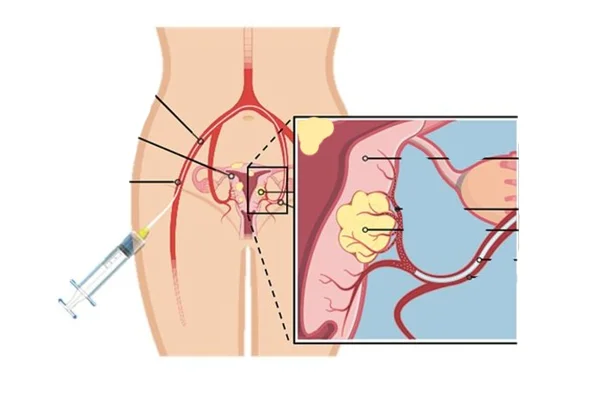
Uterine Artery Embolisation is a minimally invasive procedure that blocks the blood supply to fibroids, causing them to shrink gradually. It is performed using image guidance and does not require large incisions.
Fibroids may cause:
Heavy or prolonged periods
Pelvic pain or pressure
Frequent urination
Infertility in some cases
The exact cause is not fully known, but contributing factors include:
Hormonal imbalance (especially estrogen)
Genetic predisposition
Obesity
Delayed pregnancy
Family history
While fibroids cannot always be prevented, risk reduction strategies include:
Maintaining healthy body weight
Regular gynecological check-ups
Balanced hormonal health
Early evaluation of abnormal bleeding
The UAE procedure involves inserting a thin catheter through a small puncture in the groin or wrist. Tiny particles are then injected to block the blood supply to fibroids. Over time, the fibroids shrink and symptoms improve.
In certain cases, ablation techniques may also be used to directly destroy fibroid tissue using heat-based energy.
The procedure offers:
No major surgical cuts
Short hospital stay
Faster recovery
Uterus preservation
Is UAE a permanent solution?
Treated fibroids shrink permanently, but new fibroids may develop.
Is hospitalization required?
Usually, a short hospital stay of one day is sufficient.
Does UAE affect fertility?
It depends on individual cases; consultation is necessary.
How soon can I resume work?
Most patients return to normal routine within one week.
Is it safer than hysterectomy?
It is less invasive and preserves the uterus.


